Project Overview
Since my freshman year of college, I’ve been deeply involved in learning and practicing cloud-native technologies like Kubernetes (K8s) and Docker. Throughout this journey, I’ve always had one idea: could I build a truly “barrier-free” cloud platform that allows anyone to easily deploy various applications? This platform should not only be developer-friendly but also enable ordinary users to get started with just one click — no complex configurations, no specialized knowledge required, as simple as installing an app. To achieve this goal, I personally purchased a physical server and multiple cloud servers. To be honest, the financial pressure far exceeded the technical challenges, but I’ve always believed: making cloud-native technology accessible to more people is worth my investment. Here, you don’t need to understand K8s or write YAML — you can deploy websites, databases, blogs, network drives, and other common applications with a single click. The platform automatically handles the tedious tasks of underlying resource scheduling, network configuration, and persistent storage, achieving a true “out-of-the-box” experience. I hope that through this project, cloud-native technology will no longer be the exclusive domain of a few, but rather a productivity tool accessible to everyone. I also want this to be a public welfare project — helping developers with their development work has always been my original motivation.
I hope this project gets approved. This is also my first time doing a project, thank you! 

Project Description
The container cloud platform is mainly divided into the following core parts, striving to let every user experience the charm of cloud-native applications with low barriers and extreme simplicity.
1. Application Marketplace
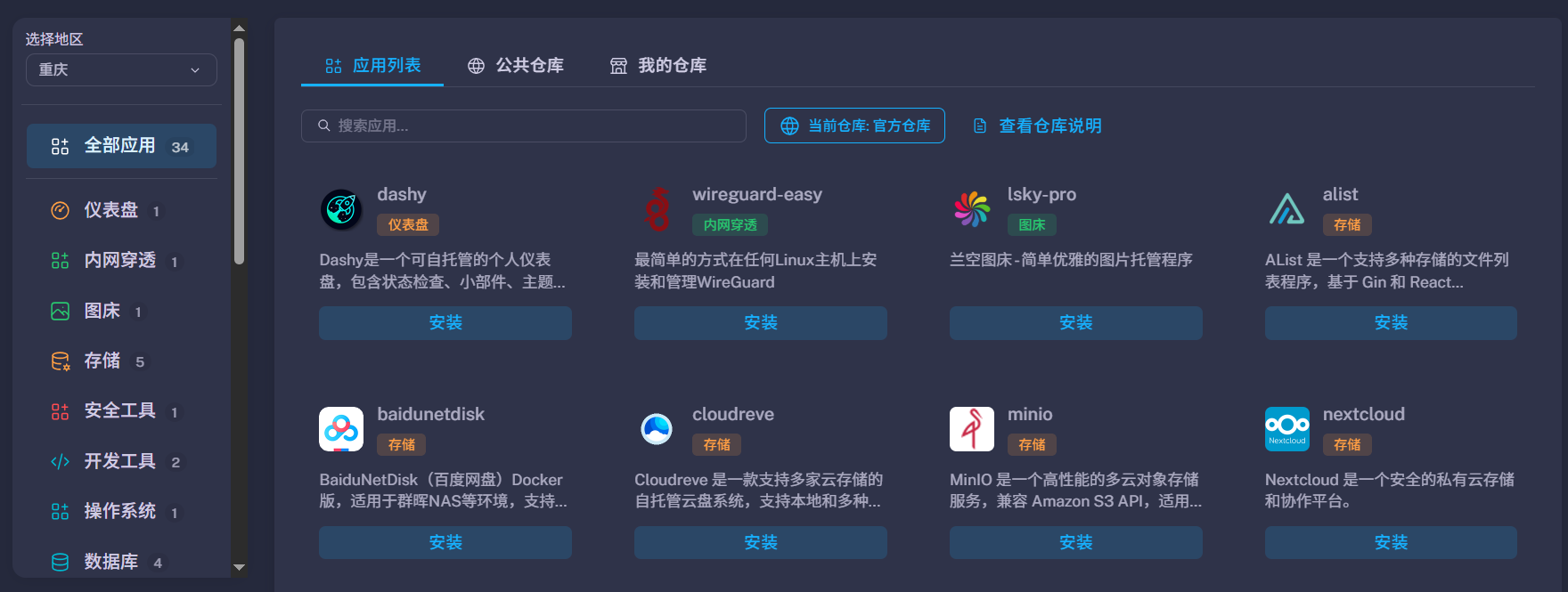
I first built an application marketplace where users can intuitively browse various popular applications. Each application comes with a concise introduction, helping you quickly understand its purpose and highlights.
Whether you’re a developer or an ordinary user, you can easily find the tools you need and deploy them with one click, eliminating the tedious process of searching and configuration.
2. Application Details
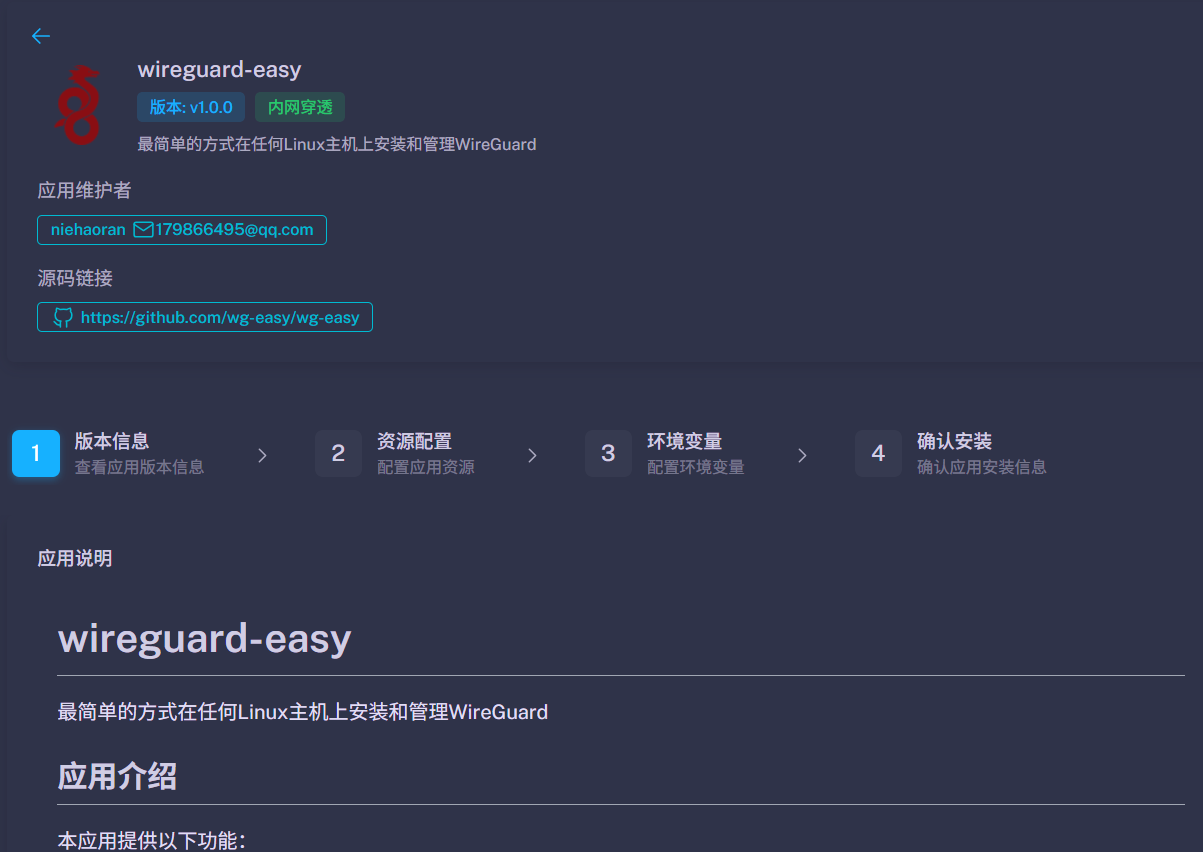
Taking MySQL as an example, each application’s detail page is divided into four major sections, helping users understand and customize deployment from every angle:
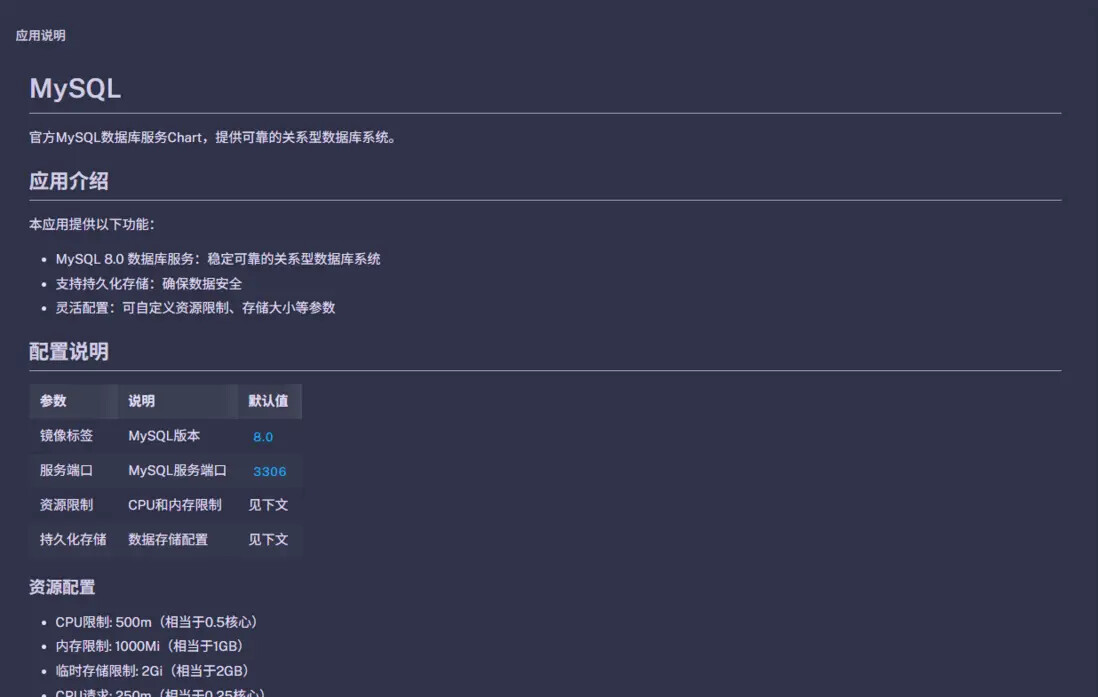
(1) Application Description (README)
The top section of the application detail page is the README, which provides a detailed introduction to the application’s features, configuration methods, deployment instructions, and more.
You can clearly see the application’s source code address and the platform maintainer’s information at a glance, significantly lowering the entry barrier.
(2) Resource Configuration
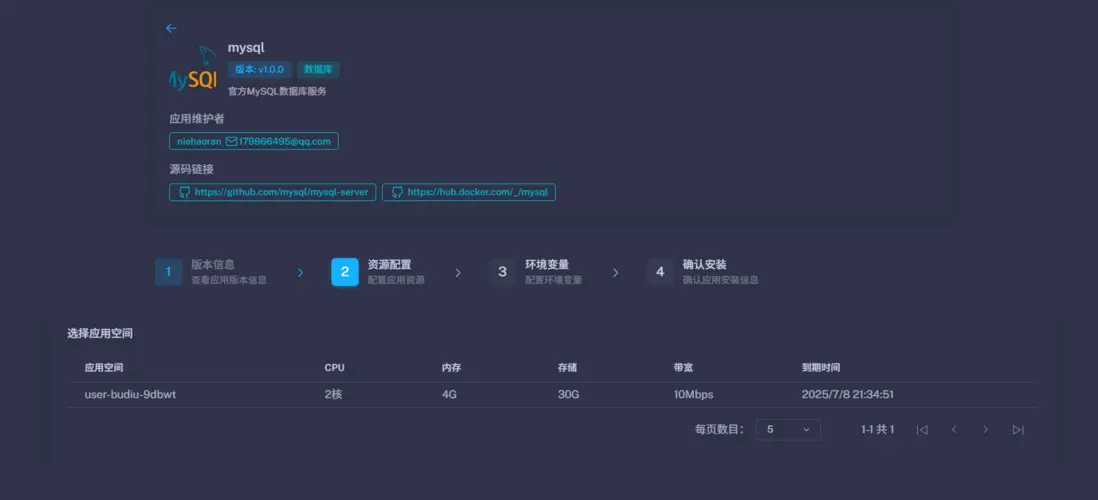
Users can intuitively view their total resource quota and flexibly set maximum/minimum resource limits for each application.
This ensures stable application performance while making rational use of server resources, making the deployment process clear at a glance and extremely convenient.
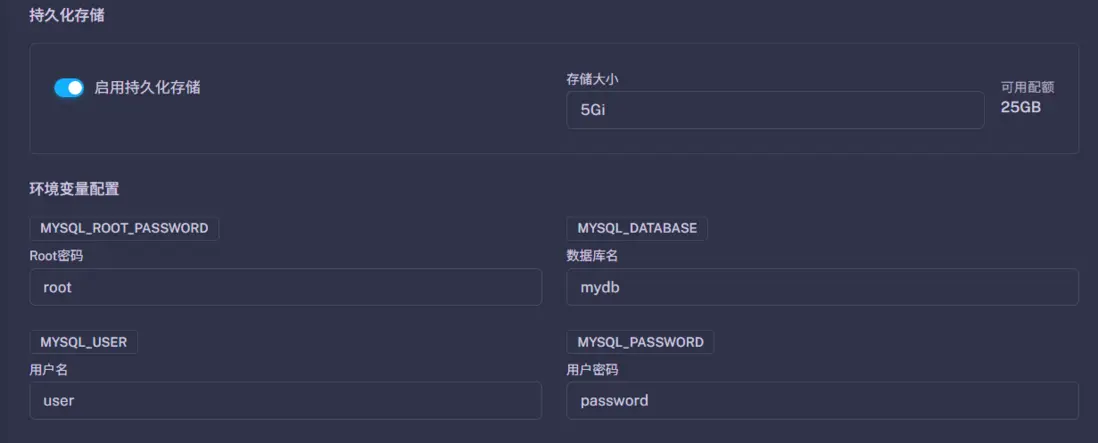
(3) Environment Variable Configuration
Environment variables can be easily configured through the UI interface to complete the application’s initial setup.
Even if you don’t understand Docker commands, you can complete parameter configuration as easily as filling out a form, greatly lowering the usage barrier.
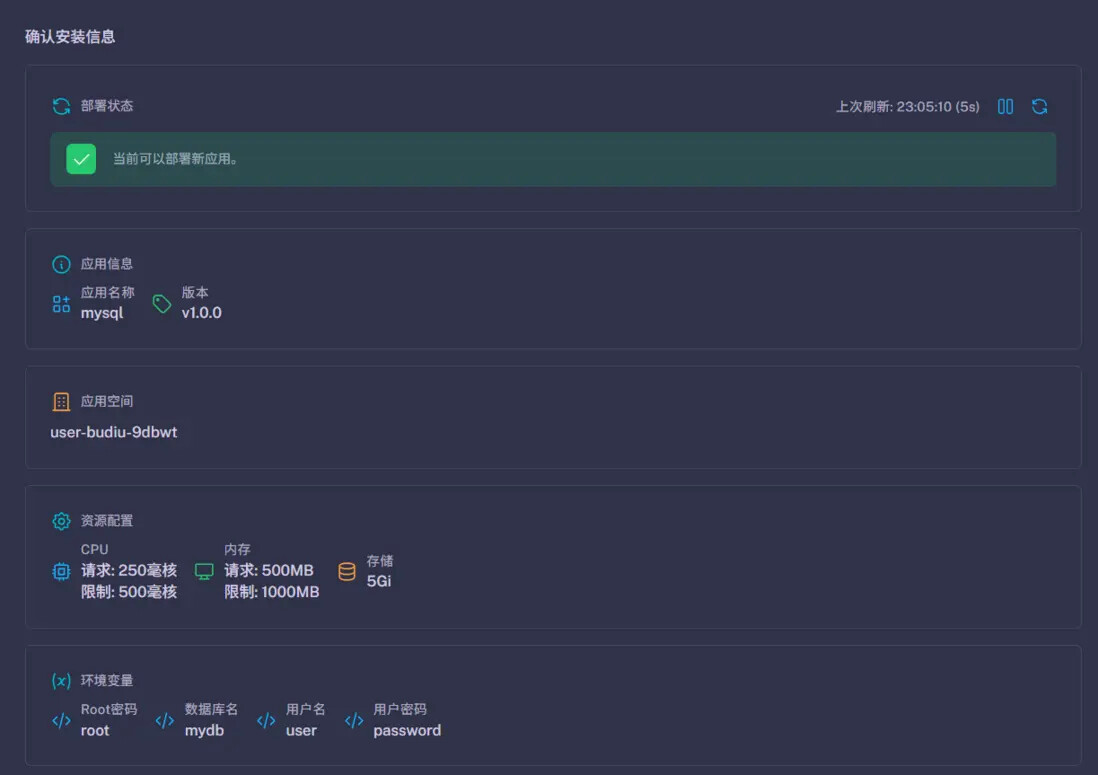
(4) Confirm Installation
In the final step, the system automatically summarizes all the parameters you’ve configured, helping you verify that the settings are correct and ensuring smooth application deployment.
The entire process is what you see is what you get, greatly improving the deployment experience.
My goal is to let everyone easily own their own cloud-native applications, just like installing an app. Welcome to try it out, and also welcome to join me in improving this platform!
2. Application Dedicated Console
Each application has its own dedicated console, allowing users to comprehensively and meticulously manage and customize their cloud-native applications. The console is divided into six major functional modules:
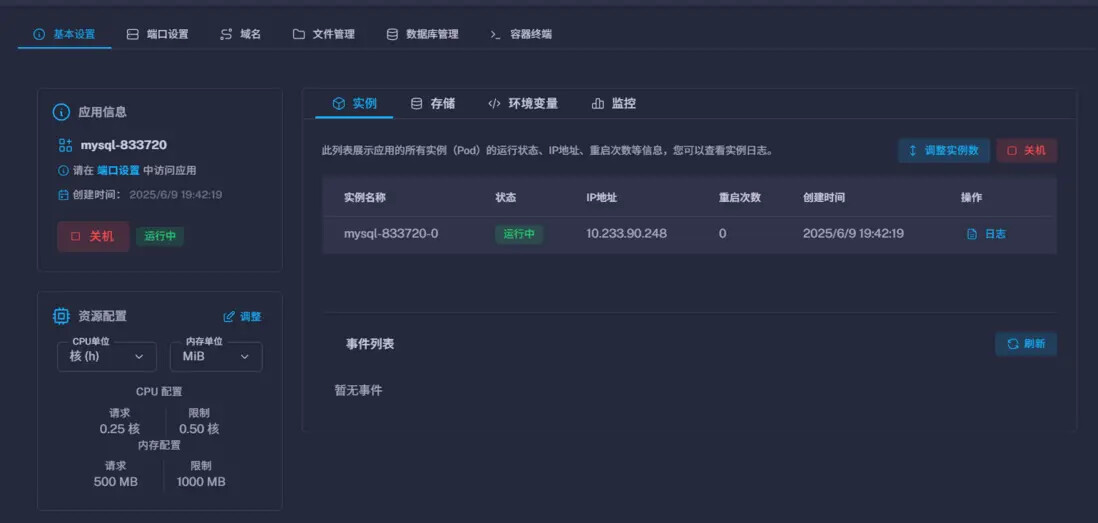
(1) Basic Settings
In “Basic Settings,” users can adjust resource usage limits and minimums at any time, view storage usage in real time, environment variable initial configurations, and application resource monitoring information.
All settings can be dynamically adjusted, flexibly responding to different scenario requirements.
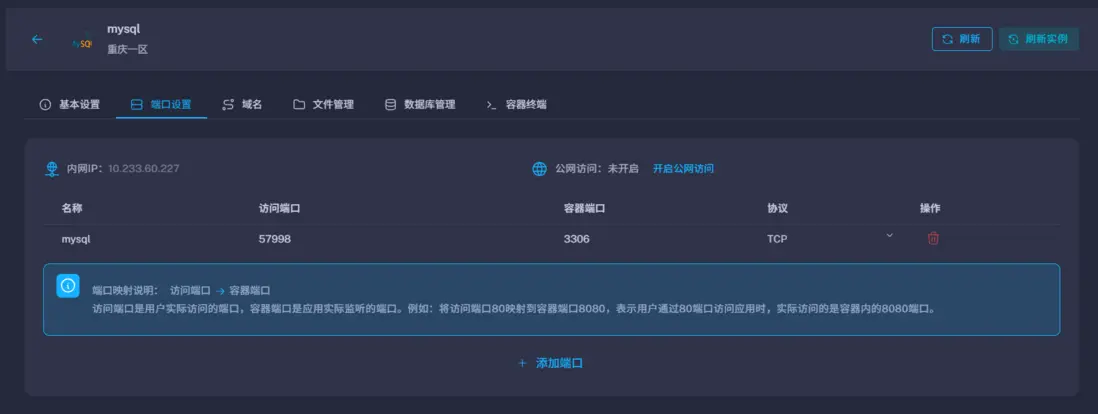
(2) Port Settings
Users can freely change the ports exposed by the application in this module, and toggle public network access with one click.
Whether it’s an internal network service or one open to the public, configuration is easy and meets diverse needs.
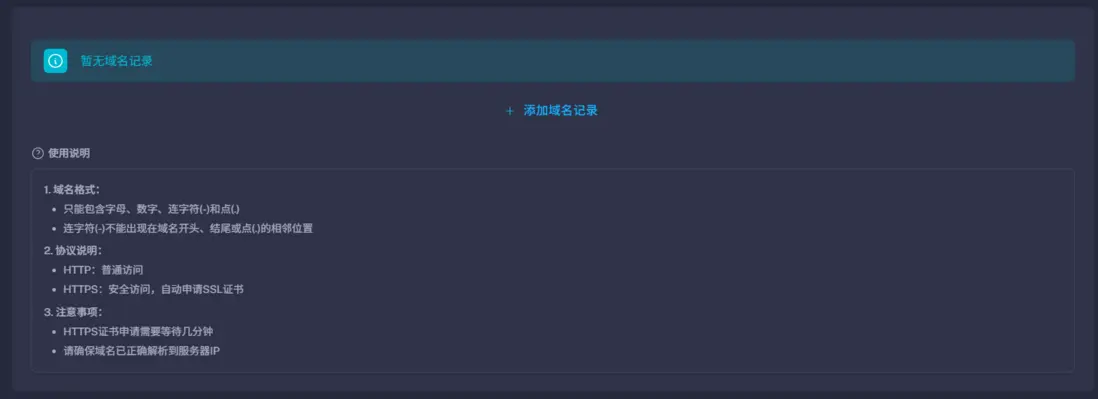
(3) Domain Management
In the “Domains” section, users can bind their own custom domain names.
It supports one-click SSL certificate application for HTTPS secure access, ensuring data transmission security. Support for free subdomains will be added in the future.
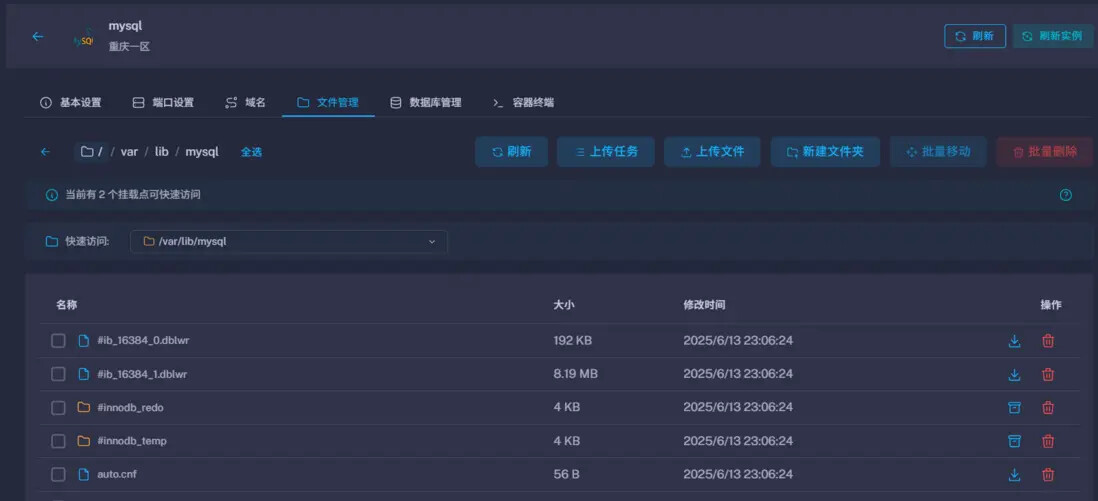
(4) File Management
The file management module allows users to upload, download, back up, and restore data, greatly expanding the application’s practicality.
Whether for daily data backups or migration and recovery, everything can be done in one place.
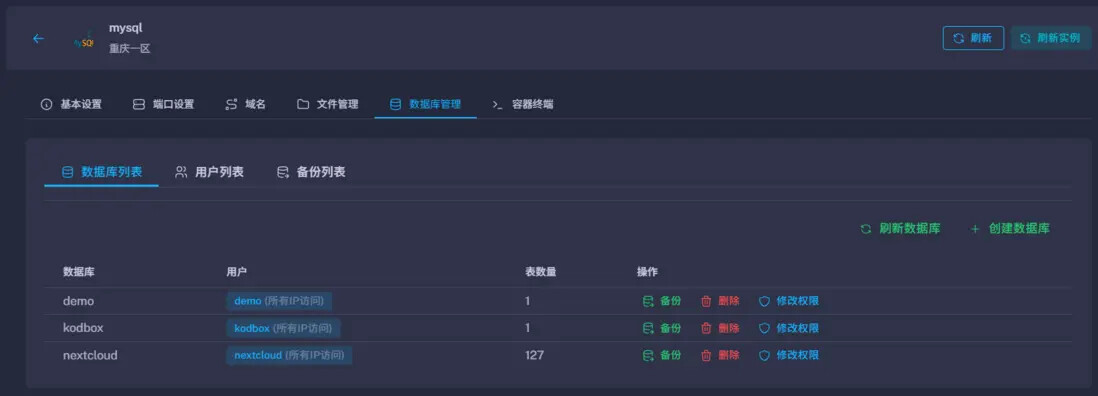
(5) Dedicated Menu
For commonly used applications, I’ve also customized dedicated operation menus, allowing users to perform frequent management operations more efficiently.
Taking MySQL as an example, common database management functions can all be accessed with one click, greatly improving the user experience.
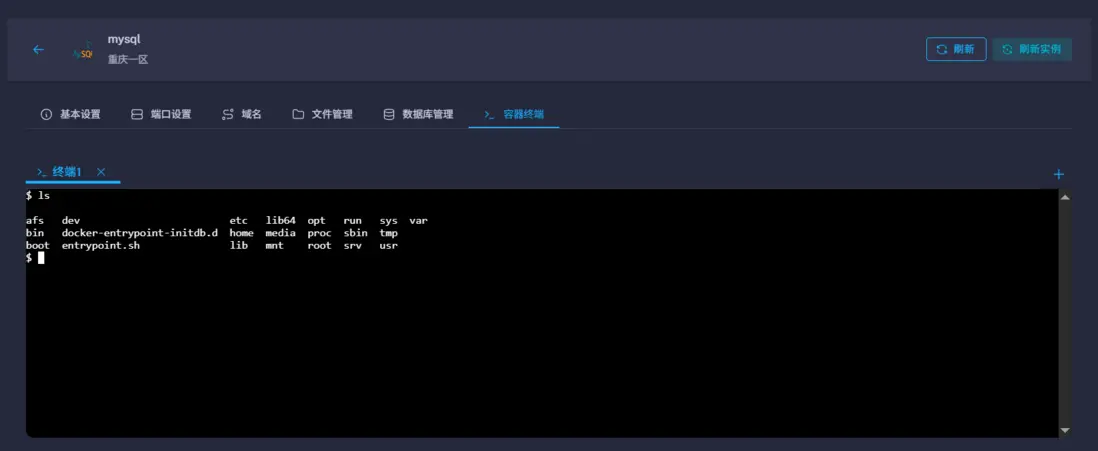
(6) Terminal
Each application comes with a built-in online terminal feature,方便 users for debugging, development, and advanced operations.
Whether viewing logs, executing commands, or troubleshooting, everything can be done efficiently anytime, anywhere.
Through the dedicated console, users can easily manage every aspect of their cloud services, just like managing local applications. Every feature is designed for “minimalism and ease of use.” Welcome to try it out and provide valuable suggestions!
Issues with the Current Cloud Platform
(1) Insufficient Number of Applications
The number of applications on the platform is still relatively limited, mainly because expansion and maintenance work is basically done by me alone. It would be great if like-minded friends would join in!
How are applications updated?
-
Open-source collaboration, automated builds
I’ve already open-sourced the application marketplace repository, using GitHub workflows to achieve automated builds and reviews.
Simply place your application files in your own branch, and the system will automatically set up your dedicated application repository. -
One-click application generation, zero barrier to participation
For most common applications, I’ve also developed a dedicated application generator.
As long as you know the Docker image address, you can generate usable application description files with one click, greatly lowering the barrier to participation.
(2) Funding Issues
As a student, my funds are indeed limited, and the platform’s improvement and operation face considerable pressure.
But please rest assured — as long as I can afford to eat, this platform will never stop updating!
My original intention for this project was never to make money, but rather to sincerely hope that more people can experience the joy of cloud-native technology.
Of course, if any experienced developer is willing to support me, or can offer me a part-time job/internship opportunity, I would be very grateful, haha!
Welcome everyone to join and co-build the platform, and also welcome your valuable suggestions and opinions! Let’s make this domestic open-source container cloud platform even better together!
Acknowledgments
Thank you very much to everyone who has followed, supported, and participated in this project!
Whether you’ve offered suggestions, contributed code, or given me encouragement and feedback during use, you are all the driving force that keeps me moving forward.
I hope this platform allows more people to experience the joy of cloud-native technology with low barriers, and welcome you to join me in growing together and creating an open-source container cloud for Chinese developers!
Project Preview: Take Your First Step in Cloud Native
—— budiu, Project Author